Principles
- Dry surface beats fancy seasoning.
- Light oil helps browning; drowning does not.
- Space matters — overcrowding steams.
- Shake / toss mid-cook for even colour.
- Finish hot for the last crisp push.
Method (straight-cut chips)
- Cut even sticks from floury potatoes.
- Optional: soak 20–30 minutes to reduce surface starch, then dry thoroughly.
- Toss with 1–2 tsp oil per large potato’s worth, salt, optional pepper/paprika.
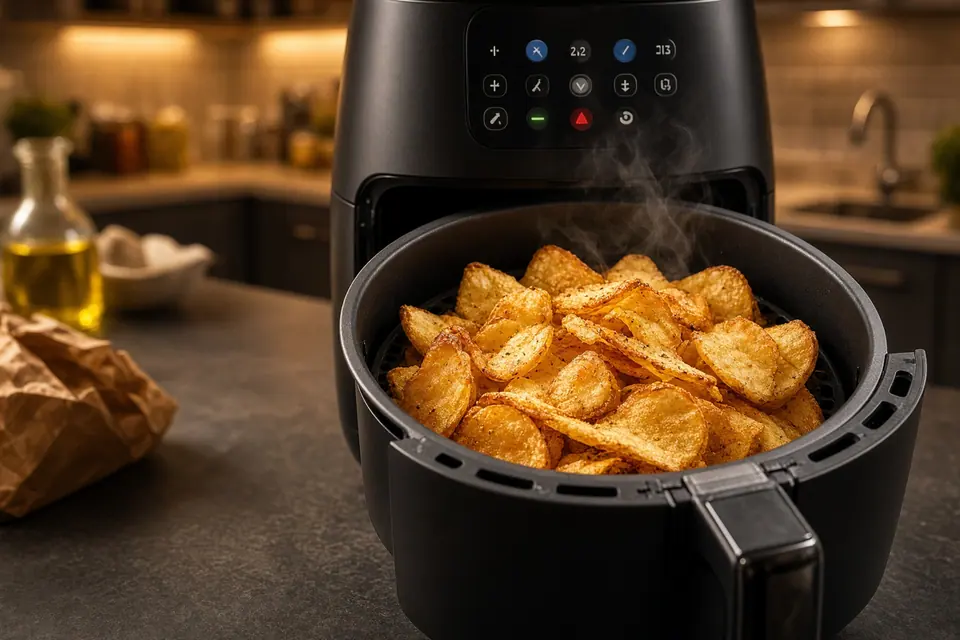
- Air fry in a single layer (or honest batches) around medium-high heat.
- Shake every 5–7 minutes.
- Add 2–4 minutes at the end if they need colour.
- Season again while hot.
Times vary by machine wattage and cut size — watch colour, not only the timer.
Frozen chips
Follow bag guidance, then ignore the fantasy photos. Still shake. Still avoid pyramids of chips. A light extra spray of oil can help some brands; others are already oiled.
Common failures
| Result | Likely cause |
|---|---|
| Soft, steamed | Overfilled basket |
| Dry leathery | Too long, too little oil, cut too thin |
| Uneven brown | No shake, uneven cut |
| Bland | Under-salted after cook |
When to bother with triple-cook instead
If it is Saturday and you want theatre, do triple-cooked chips. If it is Tuesday and you want dinner, air fryer wins.
Pairings
- Salt & vinegar
- Garlic mayo
- Curry sauce if you are reheating chippy gravy (no judgement)
See sauce matrix.
Why air fryer chips go wrong, and how to fix each one
An air fryer is a small fan oven. A heating element sits above the basket and a fan blows hot air down and around the food, which dries the surface and browns it. That explains nearly every result you'll get: anything that stops air reaching the surface of each chip, or adds water to it, makes them softer and paler.
Batch size decides the result
The capacity printed on the box (4 litres, 5.5 litres and so on) is the volume of the basket, not the amount of chips it will crisp. For fresh chips, aim for a layer no more than two chips deep, with gaps you can see between them. In a typical single-drawer machine that's roughly one large potato per batch. A dual-drawer machine lets you run two batches at once rather than one overcrowded one. If you're feeding four, cook in rounds and keep the first batch warm on a rack in a low oven, not piled in a bowl where the steam softens them.
Soaking and drying
Soaking cut chips in cold water for 20 to 30 minutes rinses off surface starch, which helps them brown evenly rather than catching at the edges. The step that matters more is drying afterwards. Tip them onto a clean tea towel, roll them dry, and give them five minutes to steam off before oiling. Wet chips spend the first ten minutes of cooking boiling in their own water.
Oil: how much and which
You need very little. A teaspoon or two of a neutral oil such as sunflower or rapeseed per large potato, tossed in a bowl so every chip gets a thin coat, is enough. Spraying directly into the basket works too, but avoid aerosol cooking sprays with propellants on non-stick baskets, as some manufacturers warn they can damage the coating over time. Check your machine's manual.
Colour, not charcoal
The Food Standards Agency's "Go for Gold" advice is to cook starchy foods such as chips to a golden yellow colour rather than dark brown, to limit acrylamide, a chemical that forms when starchy foods are cooked at high temperatures. In practice that means pulling them when the edges are golden and crisp, not when the thin ends have gone dark.
A quick fault-finder
| Problem | Likely cause | Fix |
|---|---|---|
| Pale and soft | Too many in the basket, or wet | Smaller batch, dry properly |
| Brown outside, raw inside | Cut too thick for the heat | Cut thinner, or start 20°C lower and finish hot |
| Dry and hollow | Too long at too high a heat | Shorter cook, a little more oil |
| Uneven colour | Not shaken | Shake every 5–7 minutes |
Related
FAQ
Can I recreate chippy chips at home perfectly?
You can get close; identical industrial fryers and throughput are rare at home.
Is beef dripping always better?
Flavour fans often prefer it; many shops use other oils for cost, diet, or supply reasons. Taste, do not dogma.
Are premium crisps always better?
Thicker textures can win; price per gram and freshness matter more than branding.
Recommended kit (Amazon)
- air fryer accessories
- Air fryer with basket
- Ninja Foodi dual basket air fryer — two drawers. A single-basket fryer is a different listing.
- Mandoline or chip cutter — even sticks cook evenly
- Kitchen scales — consistent batches
- Oil spray mister — light coat without greasy mess
As an Amazon Associate I earn from qualifying purchases.
The other lines stay names.