The queue is sacred
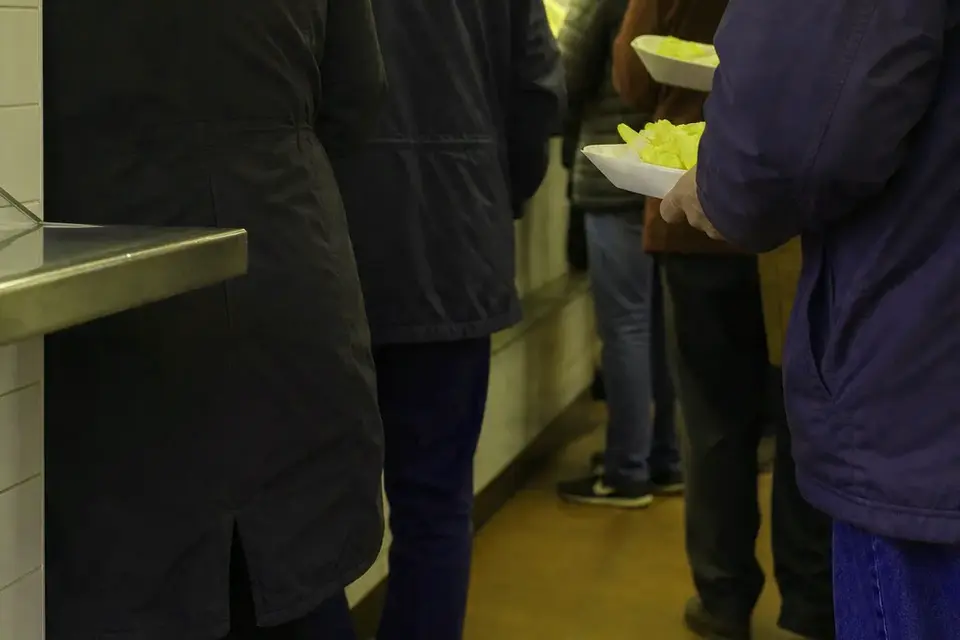
- Join the back. Not the side. Not “I’m just asking a question” at the front.
- Know your order before you hit the glass, or be ready to decide in ten seconds.
- Phones are fine until you become the person who discovers the menu exists only when it is your turn.
Ordering like a local (even if you are not)
Lead with the main, then sides, then extras:
“Cod and chips please — large — mushy peas — salt and vinegar — scrapings if you have them.”
Ambiguity costs time:
- “Whatever’s good” is not a SKU.
- “Not too greasy” is not a fryer setting staff can key in.
- Allergies: say them clearly and early.
Salt, vinegar, and the paper
- Salt and vinegar preferences vary wildly. If you care, specify.
- “Open” vs wrapped depends on whether you are eating now or walking.
- Steam is the enemy of crisp. Vent if you are not eating immediately.
Scraps, bits, and batter crumble
In many northern shops, scraps (fried batter bits) are a love language. Ask politely. Do not demand a free second meal’s worth unless the shop is offering.
Payment and patience
- Card is widely accepted; still useful to have a backup plan in smaller towns.
- Peak times (Friday evening, seaside Saturday) are not the moment for a twelve-item custom build with three cooking methods.
- Staff who remember regulars are running a social database, not a corporate CRM — be decent.
Eating in the car
A classic. Also a upholstery decision. Put something down. Your future self in the passenger seat has rights.
Kids and groups
- One spokesperson beats five simultaneous customisers.
- If someone hates fish, order early for them so the whole queue is not held hostage by a debate about sausages.
What not to do
- Photograph every step of service in a tiny shop without asking
- Lecture staff about oil chemistry from a blog (even this one)
- Leave the counter without checking you received what you paid for
- Review-bomb a shop for being busy on a bank holiday
Regional habits worth knowing
Chip shop customs change as you travel around the UK, and getting them right is half the fun.
- Scotland: "salt and sauce". In Edinburgh and much of the east of Scotland, the default seasoning is "salt and sauce", a thin brown sauce mixed with vinegar, rather than salt and vinegar. Elsewhere in Scotland, ask for "salt and vinegar" and you'll get that. A "supper" means the main item with chips: a fish supper is fish and chips.
- The North West: scraps. In Lancashire and Yorkshire, loose bits of fried batter are called scraps and are often free if you ask. Further south the same thing is "bits" or "crispy bits", and not every shop keeps them.
- The North East and Yorkshire: "fish and chips twice". Families order by count: "fish and chips twice, one small chips" is a normal sentence.
- The Midlands and the North: gravy and curry sauce are standard. In much of the South, curry sauce is common but gravy less so.
- Wales: "chips, cheese and curry" is a late-night classic in university towns.
Portion names aren't standard either. A "small" in one shop is a "regular" in another, and many shops do a child's portion or a "mini fish" if you ask. If you're not sure how big a large is, ask to see one before ordering for the table.
Allergies and asking questions
Shops must be able to tell you which of the 14 major allergens are in their food, under UK food information law. Asking what oil they fry in or whether gluten-free batter is cooked separately is normal, and it's easiest when the queue is short. See gluten-free at the chippy for what to ask.
Taking it home without soggy chips
Most chip shop meals are eaten at home, and the ten minutes in the car are where chips go limp. The cause is steam: hot chips keep releasing moisture, and a sealed box or tightly wrapped paper traps it.
- Ask for it open or loosely wrapped if you're only going a few minutes. Many shops will leave the top of the paper folded rather than sealed.
- Crack the lid on polystyrene or cardboard boxes so steam can escape. It costs a little heat and saves a lot of crispness.
- Keep the vinegar until you're home. Vinegar on chips that then sit wrapped makes them soft faster. Many shops will give you sachets or let you season at home.
- Separate the sauce. Curry sauce, gravy and mushy peas in their own pots stop the chips underneath turning to mash.
- Carry it flat. A bag on its side pools sauce and grease at one end.
If the chips do arrive soft, a few minutes on a wire rack in a hot oven or an air fryer brings most of the crunch back; the reheating takeaway page has times and temperatures. Fish reheats less well than chips, so eat that first.
A note on paper: most shops now wrap in food-grade white paper or use card boxes. Wrapping in old newspaper stopped decades ago because of concerns about printing ink on food, even though the nostalgia survives.
Related
FAQ
Can I recreate chippy chips at home perfectly?
You can get close; identical industrial fryers and throughput are rare at home.
Is beef dripping always better?
Flavour fans often prefer it; many shops use other oils for cost, diet, or supply reasons. Taste, do not dogma.
Are premium crisps always better?
Thicker textures can win; price per gram and freshness matter more than branding.